

Most teams working with cloud marketplaces already have a PDM (Partner Development Manager). They’re co-sell eligible, have relationships inside Amazon Web Services or Microsoft, and are actively trying to engage in co-sell. On paper, this should translate into a pipeline. In reality, it rarely does.
What most teams underestimate is that access is not scarce. Attention is.
In this article, we are going to break down exactly that.
→ How to fix your pipeline by making it easier for your PDM to bring you into more deals
Let’s begin.
Cloud GTM is evolving
This gap is a direct result of how cloud GTM has evolved. Because, cloud marketplaces are no longer an experimental channel. They have now become a primary procurement layer for enterprise software.
Let’s look at a few figures:
- Cloud marketplace transactions are growing 40–60% year-over-year (Canalys, Gartner estimates)
- Marketplaces are projected to influence $80B+ in software spend by 2028 (Canalys)
- Over 70% of enterprise buyers prefer purchasing through existing cloud commitments like AWS EDP or Azure MACC rather than starting new procurement cycles (Forrester)
These figures are further proof that shift matters. And software is being increasingly transacted through cloud providers like Amazon Web Services and Microsoft. And those providers are not passive.
- AWS alone has hundreds of thousands of partners globally
- Their field teams are aligned around driving consumption and committed spend utilisation
- A growing percentage of enterprise deals now involve co-sell motions tied to marketplace procurement
⏭️ But here is what most teams miss: the shift isn’t just in how software gets bought. It’s in what it now takes internally to compete.
Cloud GTM has moved well beyond listing on a marketplace and setting up an integration. The ISVs generating consistent pipelines from AWS and Azure aren’t just better at partnerships. They are running a fundamentally more connected motion, one where Finance, Marketing, and Sales are all operating inside the same Cloud GTM workflow, not in parallel to it.
What does that actually look like in practice?
-
Account mapping comes first
Before a single deal is worked, high-performing teams map their CRM accounts against the cloud provider’s install base. This tells you which of your prospects or customers are already AWS or Azure accounts and therefore where co-sell is a natural fit versus a forced motion.
This runs continuously. As new accounts enter your pipeline, they get mapped. As cloud field teams update their account coverage, your mapping updates too. The output is a prioritised list of accounts where cloud involvement is most likely to accelerate a deal.
-
Propensity scoring narrows it further
Account mapping tells you where co-sell could work. Propensity scoring tells you where to focus first.
Scores are built from signals like:
- Active cloud consumption or committed spend (EDP, MACC) in the account
- Product usage patterns that indicate expansion potential
- Overlap with accounts the cloud field team is already actively working
- Historical win rates in similar accounts
The result is a ranked list. Not every account gets the same level of co-sell investment. The ones with the highest propensity scores get prioritised. PDMs are engaged earlier, deals are structured more deliberately, and Marketing runs targeted plays against those accounts specifically.
-
Finance is part of the workflow, not outside it
This is where most teams leave significant value uncaptured. Hyperscalers offer a range of funding mechanisms that directly impact deal economics but claiming them requires Finance to be actively involved in the Cloud GTM motion.
What’s typically available:
- Market Development Funds (MDF) for demand generation activities tied to cloud-attached pipelines. Time-bound, require pre-approval, and need documented ROI. Without a Finance-owned process, these go unclaimed.
- Co-sell incentives deal progression through co-sell can unlock financial incentives for both the ISV and the cloud field team. PDMs are more motivated to prioritise deals where these are in play.
- Hyperscaler-specific programs AWS ISV Accelerate, Microsoft MACC eligibility, and Google Cloud Partner Advantage each carry funding tiers, fee structures, and co-sell support levels that directly affect how you price and position deals.
When Finance has visibility into which incentives are active, which funds are available, and how they map to open pipeline, deal economics improve and the co-sell motion becomes easier to justify internally.
-
Marketing runs plays against the accounts that matter
Once account mapping and propensity scoring are in place, Marketing has something it rarely has in a typical ABM motion: a ranked, signal-backed account list tied to real buying context.
That changes how campaigns are built:
- Outbound and paid efforts concentrate on accounts with active cloud commitments and high propensity scores
- Campaign timing aligns with budget utilisation cycles — typically Q3 and Q4 when EDP and MACC drawdowns accelerate
- Co-marketing opportunities with the hyperscaler field team provide coverage in named accounts that Marketing alone couldn’t reach
The shift worth internalising
Most teams treat Cloud GTM as a partnership function with occasional Sales involvement. The teams consistently generating pipeline from it treat it as a company-wide motion, where account intelligence feeds prioritisation, prioritisation informs co-sell engagement, co-sell engagement unlocks incentives, and Finance and Marketing are built into every step of that loop.
That’s what separates teams that occasionally win deals through AWS or Azure from teams that have made it a repeatable, scalable channel.
PDMs don’t own your pipeline.
They’re managing dozens, sometimes hundreds, of partners at the same time, and they’re not trying to distribute attention evenly.
So, what are they trying to do instead?
⏩ They’re prioritizing what’s easiest to sell and what aligns with their goals inside active accounts, which usually comes down to driving customer acquisition and committed cloud spend.
So the relationship isn’t the lever.
It gets you access, but access is table stakes. What actually matters is whether you make it easy for a PDM to use you inside a deal. If that’s not clear, you don’t get pulled in consistently, no matter how strong the relationship looks on the surface.
Once you look at how PDMs actually operate, the next question becomes obvious –
If the relationship isn’t enough, what’s stopping teams from getting pulled into deals consistently?
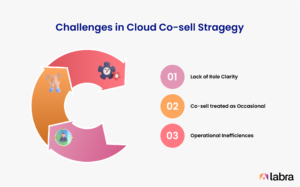
In most cases, it’s not a lack of value. It’s a lack of clarity and structure around how that value shows up in a deal.
1️⃣ The first issue is that most teams don’t make their role in a deal obvious. Their product might genuinely help, but that connection isn’t clear at the moment it matters. A PDM looking at multiple opportunities needs to quickly understand where you fit, what problem you solve, and how it helps move the deal forward. If that takes effort to figure out, it usually doesn’t happen.
2️⃣ The second issue is that co-sell is still treated as something you “do” occasionally, not something that’s built into how deals move. There’s no clear ICP defined in cloud terms, no repeatable use case, and no clear trigger for when to involve AWS or Azure. So every deal becomes a one-off conversation instead of part of a system. That works at low volume, but it doesn’t scale into a reliable cloud co-sell pipeline.
3️⃣ The third issue is operational. As deal volume increases, the gaps become more visible. Referrals are tracked manually, context is scattered across systems, and updates rely on back-and-forth. At that point, it’s not a demand problem. It’s an execution problem. Even strong opportunities don’t move cleanly because the system around them isn’t built for it.
▶️ Put together, this is why most AWS PDM relationships or co-sell strategies feel inconsistent. The pieces are there, but they’re not connected in a way that makes it easy for a PDM to act quickly and repeatedly.
Alignment with cloud priorities need to be visible
Working with Amazon Web Services or Microsoft puts you in the ecosystem. But that doesn’t automatically translate into “relevance” inside a deal. What matters is whether your role maps clearly to what the cloud provider is trying to drive in that specific account.
In practice, that comes down to a few things.
Cloud teams are measured on
- consumption,
- how quickly customers utilize committed spend,
- making progress within key accounts
AWS alone operates on tens of billions of dollars in pre-committed enterprise spend (EDP), and across both AWS and Azure, a large portion of enterprise cloud budgets are committed upfront over multi-year agreements.
That changes how deals get prioritised.
Also, did you know?
- Hyperscaler cloud commits across AWS, Azure, and Google Cloud hit $419 billion, with a $38.9 billion jump in just 90 days. Source: Partner Insight Newsletter, citing hyperscaler earnings.
- Global cloud infrastructure spending hit $102.6 billion in Q3 2025, up 25% year on year, driven by scaled enterprise AI deployment. Source: Omdia, December 2025
So in most enterprise conversations, the question isn’t, “should we buy this?” It’s, “does this help us use the spend we’ve already committed?”
That’s the lens PDMs are operating through as well.
Your product may genuinely contribute to cloud usage, but if that connection isn’t clear in the context of a deal, it doesn’t get used.
👉A PDM will prioritize the partners where the link to consumption and deal progress is obvious.
When that connection is explicit, the dynamic changes. Because it becomes easier to position you internally, easier to justify your involvement, and easier to bring you into deals without adding friction.
When it isn’t, the relationship stays high-level. You’re in the ecosystem, but you’re not consistently part of how deals actually move.
Why co-sell becomes inconsistent
Most teams already have some version of a co-sell workflow in place. Deals get shared, referrals are created, and PDMs are looped in at different stages.
The issue is whether it operates as a system or not.
At low volume, informal workflows hold up. A few deals can be managed through email, CRM notes, and ad-hoc coordination. But as pipeline scales, those same workflows start to break down.
This is where most teams hit a ceiling.
For them, there’s no unified view of:
- Which deals are active in co-sell?
- Where do they sit in the cycle?
- Or where partner engagement is actually required?
And this creates friction.
- Deals slow down because PDMs don’t have the context they need at the right time.
- Internal teams spend cycles chasing updates instead of progressing opportunities.
- And more importantly, qualified deals don’t get activated through co-sell when they should.
🌟 Consistency is what will drive your pipeline.
High-performing teams don’t wait for deals to figure this out. They already know which accounts matter, where they are active, and which ones are likely to benefit from cloud involvement. That mapping exists before the deal shows up. And that exactly is what changes the nature of engagement.
Instead of evaluating relevance deal by deal, they operate from a defined set of accounts where co-sell is expected to play a role. Opportunities are then brought into that structure with clear context, not introduced as isolated tasks.
From a PDM’s perspective, this removes a significant amount of effort.
They are no longer being asked to interpret whether an account is relevant or where the partner fits. That work has effectively already been done. What remains is a much simpler decision, whether to engage and how to progress the opportunity within the account.
That reduction in decision effort is what drives consistency.
At scale, PDMs are not prioritizing based on relationship strength or responsiveness. They are prioritizing based on how quickly they can understand an opportunity and act on it within the context of the accounts they manage.
When account mapping is clear and applied consistently, co-sell stops being reactive. It becomes part of how the pipeline is built and progressed across a defined set of accounts.
That’s the difference between occasional involvement and a motion that produces a predictable pipeline.
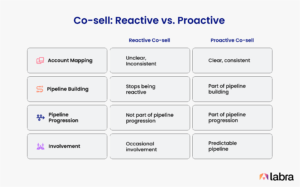
⭐ Teams that get this right also build consistency in how they engage.
Pipeline is shared regularly, opportunities are clearly defined before they are brought in, and engagement follows a predictable rhythm. Over time, this makes the relationship easier to work with and more effective, because both sides know what to expect and how to act.
That’s what allows co-sell to scale beyond individual deals and start contributing to the pipeline in a reliable way.
What high-performing teams do differently
Teams that consistently generate pipeline from PDM relationships are not doing something completely different. They are doing a few things more clearly and more consistently.
1. They bring structured opportunities
Instead of bringing vague asks, they bring well-defined opportunities.
They know:
- which account they are working on
- what the use case is
- how their product fits into the deal
This means the PDM does not have to spend time figuring out relevance. They can immediately decide whether to engage and how to help move the deal forward.
2. They explain their value in a cloud context
It is not enough to explain what the product does. High-performing teams make it clear how does their product:
- contributes to cloud usage
- supports committed spend
- or helps move an active account forward
This makes it easier for the PDM to position them internally within AWS or Azure.
3. They maintain visibility across deals
Deals and referrals are not tracked in isolation. Both internal teams and PDMs have visibility into:
- which deals are active
- what stage they are in
- what needs to happen next
This reduces back-and-forth communication and keeps everyone aligned.
4. They build repeatable workflows
They do not treat co-sell as a one-off activity. They have a consistent way of:
- bringing deals into co-sell
- involving PDMs
- and progressing opportunities
Over time, this creates consistency. PDMs know what to expect, and engagement becomes easier.
Turning relationships into repeatable pipeline
Most teams already have the relationship layer in place.
The shift happens when that relationship is supported by a system.
This means co-sell is not handled separately or manually, but becomes part of how the pipeline is managed. Deals and referrals are tracked in one place, co-sell activity is connected to CRM workflows, and there is shared visibility across teams.
When this foundation is in place, the relationship becomes easier to act on.
Instead of relying on individual follow-ups or one-off coordination, both teams are working with the same context and can move deals forward more consistently.
That is when PDM relationships move from being helpful to being scalable.
What high-performing cloud GTM looks like
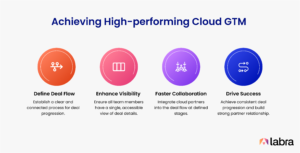
In a well-structured cloud GTM motion, the process is clear and connected. Deals are not handled in silos or through one-off efforts. Everything follows a defined flow.
Let’s understand this further.
How do deals move
Deals do not move into co-sell or marketplace automatically. Teams define this as part of their process.
When a deal enters the CRM, the first step is to identify whether it is a good fit for co-sell. This usually depends on the account, the use case, and whether the deal connects to cloud priorities like consumption or committed spend.
If it is a fit, the deal is brought into co-sell early, with clear context. The PDM can see what the deal is, where the partner fits, and how it helps move the opportunity forward.
As the deal progresses, the marketplace path is introduced when procurement or committed spend becomes relevant. At this stage, the deal is already aligned, so moving into marketplace is a natural next step, not a last-minute decision.
Because this flow is defined upfront, teams are not making these decisions case by case. They follow a consistent process, which keeps deals moving and removes confusion about what happens next.
How visibility works
Deal details sit in CRM. Referrals live in partner portals. Updates are shared over email or Slack. As a result, PDMs do not have a clear view of what is active or where they are expected to engage. They need to ask for context or wait for updates, which slows things down.
High-performing teams fix this by keeping co-sell activity tied to a single system.
When a deal is brought into co-sell, the relevant information is already captured and easy to access. The account, the use case, and the current stage are visible without needing additional explanation.
Referrals are created and tracked in a structured way, so both internal teams and PDMs can see:
- which opportunities are active
- what stage they are in
- and what needs to happen next
Because of this, teams are not relying on follow-ups to stay aligned. Everyone is working with the same view of the deal, which makes it easier to act at the right time.
How teams collaborate
In most teams, collaboration depends on individual effort.
Someone remembers to loop in the PDM. Someone shares context over email. Someone follows up to move things forward. This works occasionally, but it is not consistent. It depends on who is involved and how proactive they are.
High-performing teams do not rely on that.
They define when cloud partners should be involved and make that part of the deal flow. Seller teams know at what stage to bring in AWS or Azure and what context needs to be shared.
Because this is already defined, there is no hesitation or delay. Teams are not asking, “should we involve the PDM?” or “who should reach out?” Those decisions are already clear.
As a result, collaboration becomes predictable. Everyone knows when to engage, what to share, and how to move the deal forward.
What this leads to
When deal flow is defined, visibility is clear, and collaboration is consistent, the entire co-sell motion starts working differently.
Deals do not slow down because of missing context or late involvement. PDMs can engage at the right time with the right information. Internal teams are not spending time coordinating or chasing updates.
As a result, more opportunities actually move forward instead of getting stuck.
Over time, this creates a clear pattern.
Co-sell is no longer something that works occasionally. It becomes a consistent part of how pipeline is built and progressed.
That is what turns PDM relationships into a reliable source of pipeline and deal acceleration.
In Conclusion
Most teams are not far from making this work.
You already have access to cloud providers, established relationships, and an initial co-sell motion in place. The gap is not in what you have, but in how these pieces come together in execution.
Today, most teams manage this across disconnected systems. Pipeline lives in CRM. Referrals sit in partner portals. Updates are shared manually. Because of this, even strong opportunities do not move as smoothly as they should.
What’s missing is a system that connects all of this.
When pipeline, co-sell, and marketplace are part of the same workflow, the motion becomes much easier to execute. Your role in a deal is clearer, engagement with PDMs happens at the right time, and deals move forward without unnecessary delays.
Cloud GTM success is not just about having access to partners.
It is about having the right system in place to make collaboration simple, visible, and repeatable across every deal.
Labra is built for exactly this. It brings together CRM, co-sell, and marketplace workflows into a single motion, so teams can engage partners faster, move deals forward more efficiently, and turn co-sell into a predictable source of revenue.