
A Labra whitepaper featuring insights from Sarah Jackson (NiCE) and Andrew Morris (Proformity), moderated by Sridhar Adusumilli (Labra).
Executive summary
A customer wants the software. The account executive believes the business case is sound. Then the deal stops, caught between a budget calendar, an unfamiliar procurement process and people who each understand only part of the purchase.
Cloud marketplaces can break that impasse, but not because they replace direct selling. Their value lies in connecting a qualified business need to a workable purchasing route. Negotiated private offers, eligible cloud commitments and flexible agreement structures give a transaction somewhere to go. They cannot supply a missing executive sponsor or manufacture urgency.
This whitepaper draws on a Labra panel discussion with alliance and sales leaders from NiCE and Proformity, moderated by Labra founder and CEO Sridhar Adusumilli. It proposes a practical operating model for software companies built on four disciplines:
- Diagnose the stall. Decide whether the deal has a demand problem or a buying problem before changing the route.
- Separate the business case from the buying route. Treat cloud commitments as a verified advantage, never as free money.
- Give the cloud partner a specific job. Replace “Can you help us close this?” with a precise, evidence-backed ask.
- Make the marketplace route easy for your own sellers. Provide expert support so account executives introduce it early.
“It’s very easy to list. It’s harder to actually leverage the marketplace. It’s a huge opportunity. You just need to unlock it in the right way. But don’t stop selling.”
Sarah Jackson, Global Alliance Strategy Manager, NiCE
Prefer to watch? This whitepaper is based on Labra’s webinar “How to Turn Stalled Cloud Deals Into Revenue Faster.” Watch the webinar on demand
1. When “we don’t buy that way” isn’t the whole answer
Jackson described a familiar situation. An account executive was working to secure a renewal, and the customer also wanted an AI expansion. When the team proposed AWS Marketplace, both the buyer and the procurement contact said the organization did not purchase that way.
Jackson treated the answer as something to investigate, not something to argue against. She contacted the AWS account team, which confirmed the customer already bought through Marketplace. With AWS’s help, the seller connected the buyer and procurement contact to the person inside their own organization who understood the process. The team secured the renewal and brought the expansion forward, combining the marketplace route with the right commercial arrangements and incentives.
The obstacle was not the product or the price. It was a gap in what the buyer knew about their own company. The right introduction did more than another discount would have.
Sellers should distinguish between a customer declining the investment and a customer describing a limit in the purchasing route under discussion. These are different problems. Procurement discovery belongs in every opportunity:
- Who manages cloud purchasing?
- Has this business unit bought through a marketplace before?
- Which internal team can confirm the process?
The goal is not to bypass the buyer. It is to help the buyer navigate their own organization with better information.
2. Diagnose the stall before changing the channel
A stalled opportunity often carries an explanation too broad to act on. “Procurement” can mean an unresolved contract term, an unidentified approver or an unconfirmed purchasing account. “Budget” can mean the investment was rejected, the period is closed or the seller has not reached the person who controls the decision.
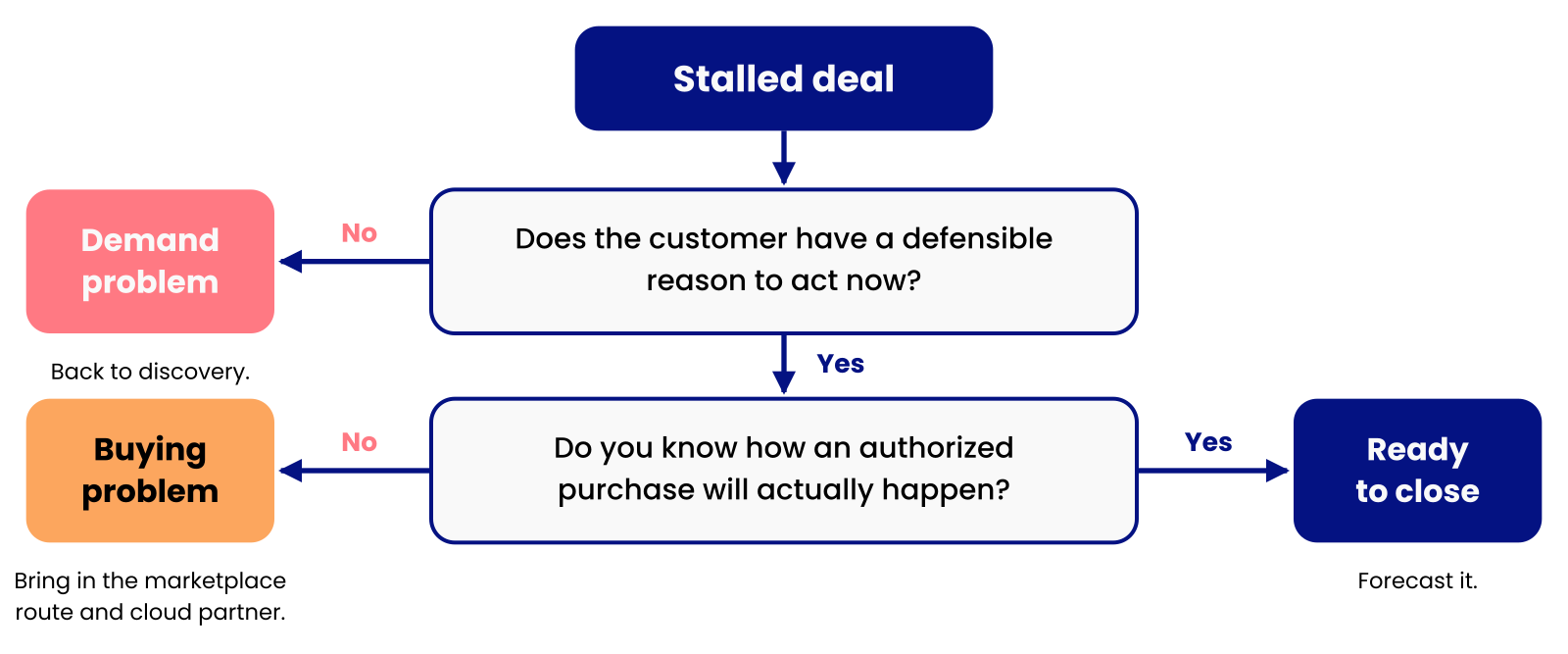
Morris urged sellers to answer three questions in plain language. If the answers are missing, he argued, the opportunity should come out of the forecast rather than receive more optimistic attention.
- Why should the customer change anything?
- Why should they act now?
- Why should they choose this supplier?
Leadership teams should add a purchasing test to that qualification. Can the team name the person who approves the investment and the person who executes the purchase? Does it know the next decision each must make? Can it explain why the marketplace route beats the existing alternative?
Demand readiness and transaction readiness
Together, these tests separate two forms of readiness. Demand readiness means the customer has a defensible reason to act. Transaction readiness means the team understands how an authorized purchase will happen. Neither substitutes for the other.
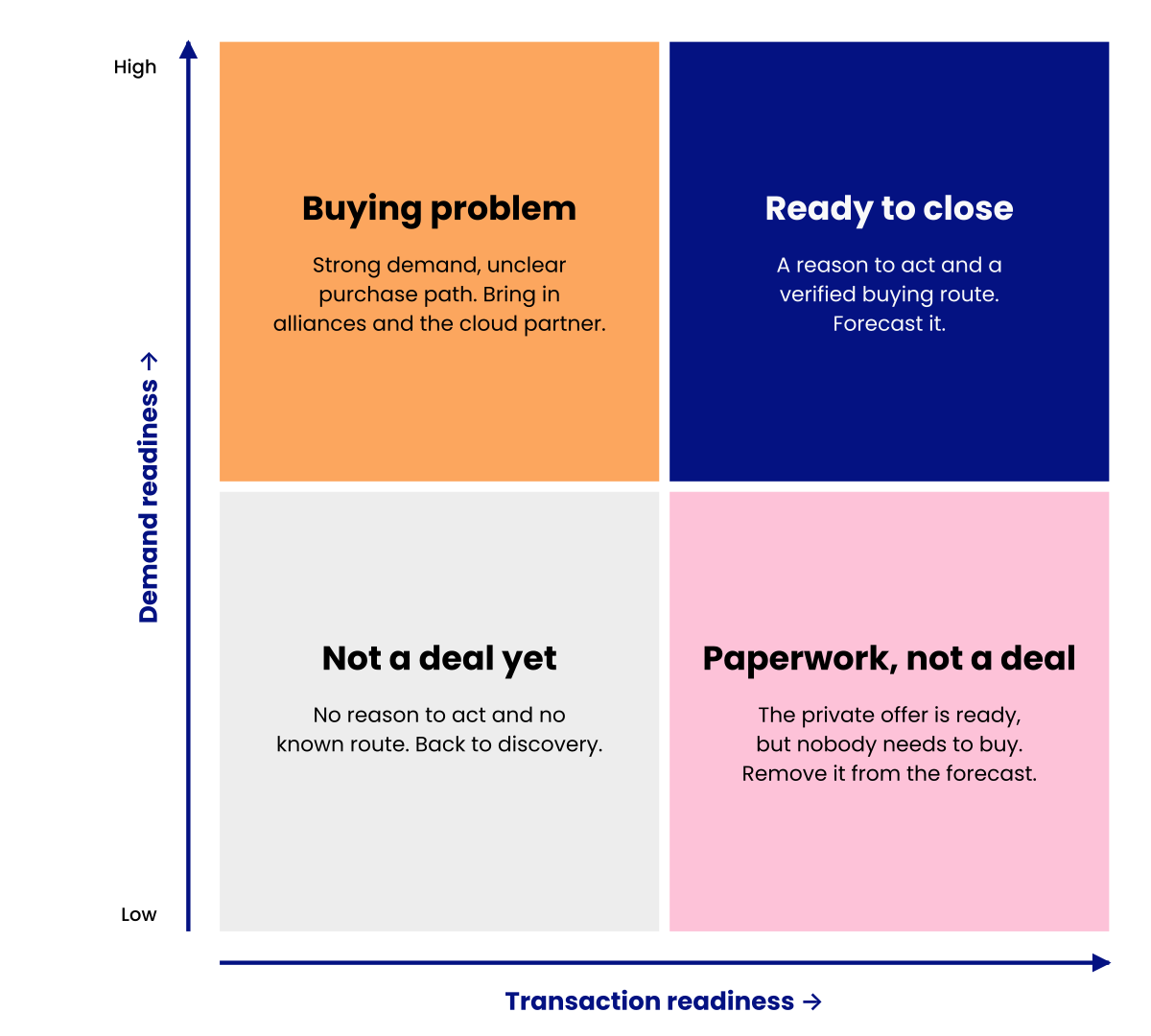
A deal with strong demand but incomplete purchasing knowledge deserves focused operational help. A deal with a fully configured private offer but no compelling reason to buy does not become forecastable because the paperwork is ready.
3. Separate the business case from the buying route
Marketplace conversations become misleading when committed cloud spend is described as money waiting to be collected. A commitment does not establish that the customer wants the product, has approved the investment or can count a particular transaction toward its agreement.
Microsoft’s documentation makes the distinction tangible. For customers with a Microsoft Azure Consumption Commitment (MACC), eligible solutions bought through multiparty private offers count toward that commitment, while purchases through Cloud Solution Provider (CSP) private offers do not (Microsoft multiparty private offers FAQ).
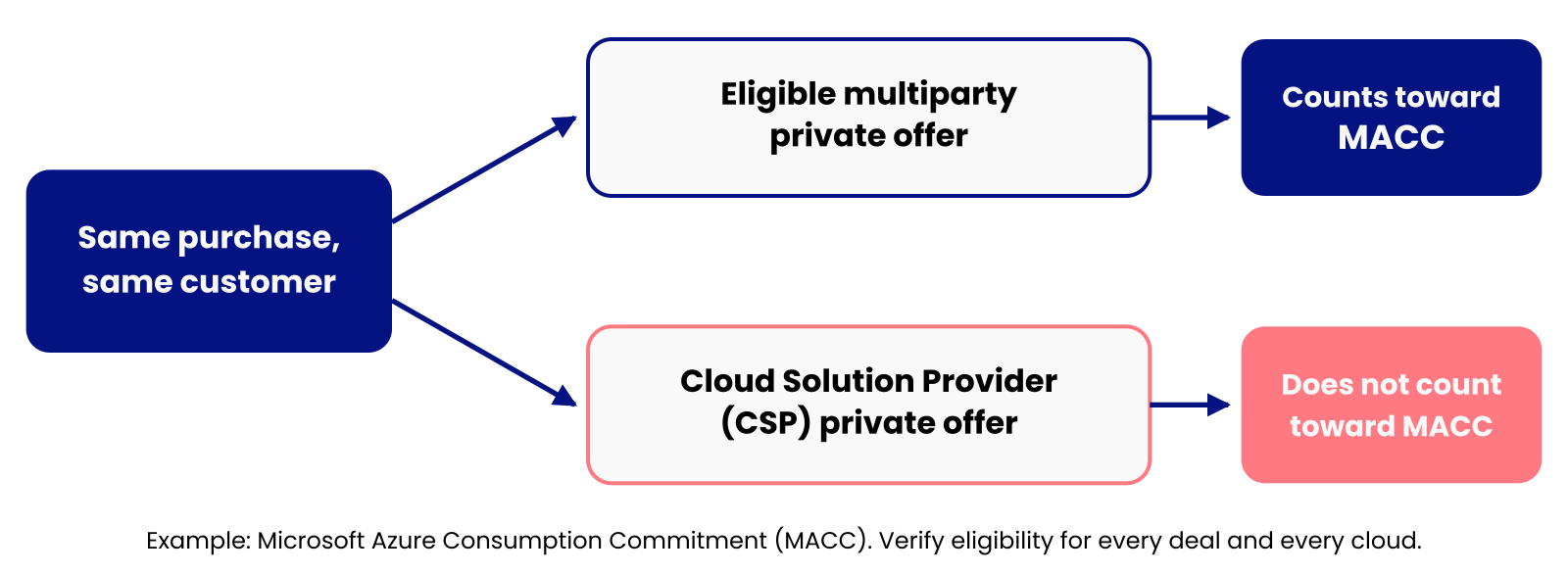
Verify before promising. The customer’s purchasing owner and the relevant cloud team should confirm the offer’s eligibility, the applicable agreement and the intended billing arrangement. One provider’s terms should never be carried into another marketplace.
The business case must still stand on its own. A purchase that helps fulfill a cloud commitment can remain a poor investment, and valuable software may deserve approval even when commitment treatment is unavailable. The strongest commercial story pairs an independently justified outcome with a verified purchasing advantage.
As Jackson put it, listing is easy and leveraging the marketplace is harder. A listing provides access to a transaction channel. It does not create demand or win the decision.
4. Give the cloud partner a specific job
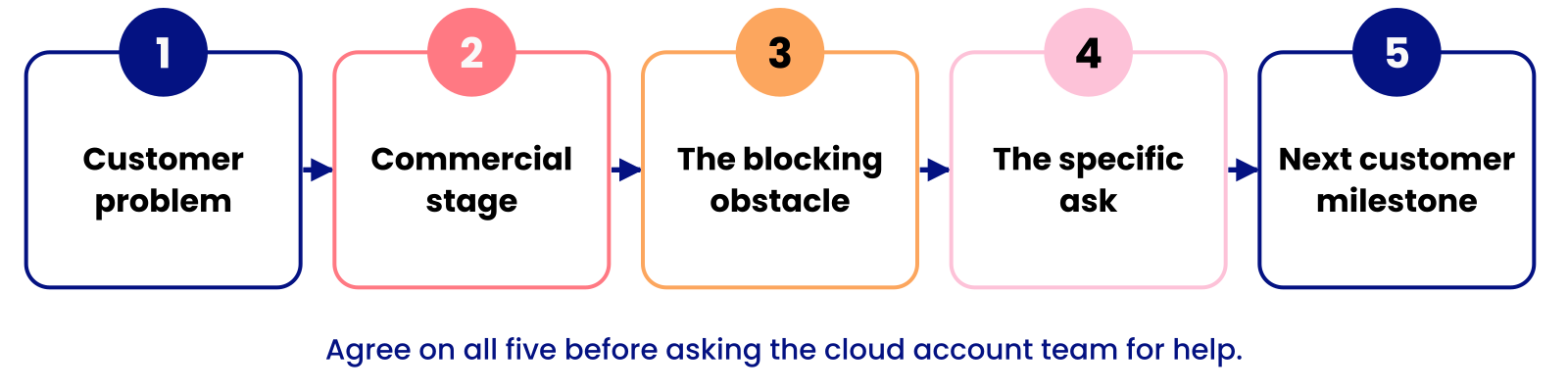
“Can you help us close this?” sounds collaborative, but it leaves the cloud account team to work out what help means. Jackson offered a sharper starting point: “What’s going to be the specific ask for AWS?”
A good request connects a known obstacle to an action the partner is positioned to take:
- An introduction to the customer’s marketplace purchasing owner
- Validation of the proposed purchasing route
- A check on whether an applicable incentive warrants further investigation
The accompanying information matters. Morris emphasized the quality of what goes into AWS’s partner engagement process, while Adusumilli cautioned against treating a score as a guarantee of account-team involvement. Registration should communicate value, not merely record activity.
This makes co-selling a joint plan rather than an escalation ritual. The software company continues to sell the business outcome. The cloud partner contributes relationships, account knowledge and program expertise where appropriate.
5. Use commercial flexibility without confusing the dates
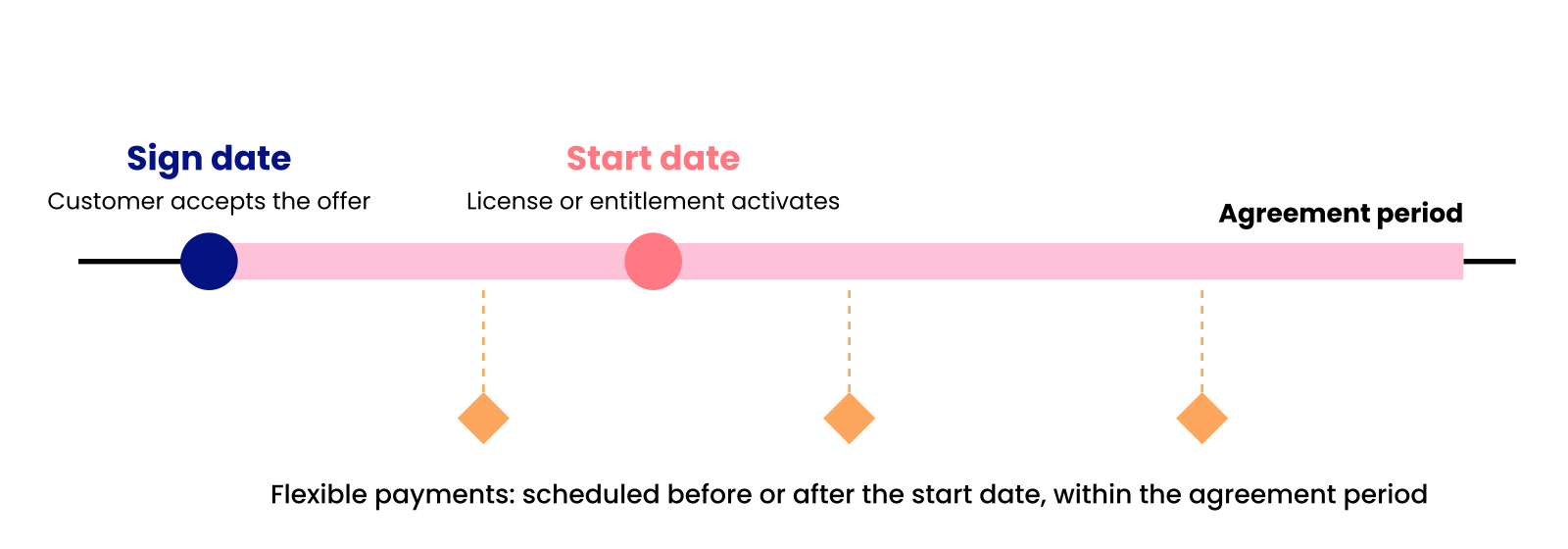
Sometimes the customer’s intention to buy is real, but its preferred service start and payment timing do not match the proposed agreement. AWS Marketplace documents mechanisms that separate those events.
For supported SaaS contract offers, including contracts with consumption pricing, future-dated agreements allow the customer to accept an offer before product usage begins. AWS distinguishes the agreement sign date from the start date, when the license or entitlement activates. Flexible payment scheduling can place payments before or after that start date, within the agreement’s permitted period (AWS Marketplace Seller Guide: future dated agreements).
Jackson used future-dated agreements in the renewal-and-expansion deal described in Section 1. Two cautions apply:
- “Closed” means different things to sales, finance and the customer. Offer acceptance, service activation and invoicing are separate events. Finance should assess revenue treatment from the actual agreement.
- Future dating should reflect a genuine purchasing decision. It is not a device for pressuring an unready buyer.
6. Make the marketplace route easy for your own sellers
A marketplace program can fail inside the software company before it meets any customer resistance. If account executives see unfamiliar terms, uncertain commission treatment and extra administration, they have little reason to introduce the option early.
Jackson’s answer is a white-glove internal experience. The alliance lead joins calls, explains the process and helps sellers understand what happens after a private offer is sent. Sellers do not need to become marketplace experts, but they keep ownership of the opportunity.
To make that support repeatable, leadership teams should:
- Name the commercial owner, the marketplace process owner and the finance approver.
- Agree upfront on how sellers receive credit.
- Give sellers one place to go when a purchasing question threatens the close.
- Introduce the marketplace route during discovery, not after negotiation is complete.
Where Labra fits
Labra is an end-to-end, AI-native Cloud GTM platform that handles the operational layer of this model. It supports marketplace listings across AWS, Microsoft Azure and Google Cloud, integrates with CRM systems including Salesforce and HubSpot, automates co-sell workflows and surfaces buying-intent signals such as Propensity to Buy.
IBM’s Brennon Bissell reports a 90 percent reduction in co-sell lifecycle time after adopting Labra’s ACE CRM integration. That figure covers the co-sell workflow, not the full sales cycle.
7. Build repeatability where the evidence is strongest
Broad marketplace availability and focused selling are compatible. A software company can support every cloud purchasing route while concentrating co-sell investment where its proof is strongest. Jackson described building momentum in particular verticals and using those wins to engage a broader cloud sales team. Adusumilli similarly advised getting good with one team or vertical before expanding.
That focus should shape positioning. A cloud seller needs to recognize the customer problem quickly, and a buyer needs a credible outcome, clear differentiation and a reason to act. Morris urged companies to align their marketplace listing with their website and support it with clear case studies and answers to common buyer questions.
A 90-day pilot
- Select a small cohort of qualified, stalled opportunities.
- Record the actual obstacle for each and confirm where marketplace procurement could help.
- Assign an owner and a next action to every open purchasing question.
- Review progress jointly across sales, alliances and finance.
Measure opportunity creation separately from transaction routing. Track whether the program creates qualified new demand, helps retain or expand customers, or simply moves an already-won purchase through a different channel. A smaller, better-qualified forecast may look less impressive at first, but it gives leadership a more honest account of where effort can change an outcome.
Conclusion: turn marketplace presence into a revenue discipline
The panel’s most persuasive insight was human rather than technical. Jackson’s buyer did not need another explanation of the product; the team needed to find the person who understood how the customer could purchase it. Morris supplied the counterweight: where no credible reason to act exists, sellers should stop treating operational activity as progress.
A marketplace becomes commercially valuable when those judgments meet. The company knows which opportunities deserve attention, the customer has a verified purchasing path, the cloud partner has a specific role and the operational work moves through a connected process. Labra supports that execution across listings, co-selling and deal management. Leadership provides the focus that turns the process into revenue.
About Labra
Labra is an end-to-end, AI-native Cloud GTM platform for software companies listing, transacting and co-selling on AWS, Microsoft Azure and Google Cloud marketplaces. Labra helps teams launch faster, co-sell smarter and manage deals in one connected workflow, so sellers can focus on winning the decision.
See the full discussion. Watch the webinar on demand, or book a demo to see how Labra helps you close cloud deals faster.